Body Fat Scales |
 |
|
|
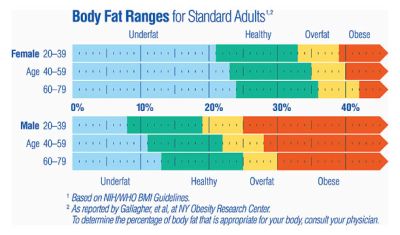
Depending on your age, sex and how active you are the level of your body fat percentage will vary. Its a measurement of the amount of your total body mass that fat, as opposed to lean body mass (muscle, bones, organs, tissues, blood, and anything else). So, for example, if you weigh 200 pounds and you have 30% body fat, this means that your body contains 60 pounds of fat and 140 pounds of lean body mass. Measuring changes in body fat percentage, rather than just measuring changes in weight, can be very motivational when you're dieting. A measurement of ones body fat percentage is a more accurate guage of your excess body weight than your BMI( body mass index), a measurement which does not take into account ones body frame size, nor does it account for the amount of muscle mass a person has. However, body fat percentage is not as popular as BMI’s because the skills and technology needed to measure body fat percentage are not readily available. However..by using the Tanita BC 453 Body Fat Scale monitor you can get these body fat % measurements taken weekly, as well as visceral fat*, metabolic age, muscle mass, % body water, physique rating, BMR and bone mass. All the information you need to monitor your progress. *Visceral fat surrounds the internal organs in the stomach/trunk area of your body. High levels of visceral fat increase the risk of high blood pressure, heart disease and type 2 diabetes. Monitoring your results can help you to stay in the low risk range. More details here Without the body fat scales the best way to
keep track on how you doing is to take your measurements on a weekly
basis(waist, thigh, hips and bust). Lean muscle gain can cause slow
weight loss but inch loss in fatty areas still occurs (e.g. around
waist, hips etc)
Women require a higher body fat percentage than men do and this extra amount of fat is natural for them as well. Also you probably noticed that with how active a person you are usually your fat percentage is lower and also that as you age increases your fat % will increase naturally along with you. The greater of a body fat percentage that you have the more at risk you are for certain diseases. Specifically obesity related illnesses such as heart disease, type 2 diabetes, stroke, and high blood pressure. How to get to a healthy source of protein into your diet? Article by Herbal Vitality |

Recommended Suppliers
Herbal Vitality
Order Online
Copyright © 2003